My name is Dan Wang, and I am an incoming Assistant Professor at the University of Arizona. I am currently a Postdoc at the University of California San Diego, where I am advised by Professor Ravi Ramamoorthi. Previously, I worked at the University of Copenhagen in association with the AI Pioneer Centre, where I was advised by Professor Serge Belongie. I received my Ph.D. degree in Electrical and Computer Engineering at the University of British Columbia, where I was supervised by Professor Z. Jane Wang and Professor Tim Salcudean. I obtained my Master's and Bachelor's degrees from Beihang University.

My research lies at the intersection of Computer Graphics, Computer Vision, and Artificial Intelligence, with the overarching goal of advancing AI systems that seamlessly integrate environmental understanding with adaptive interaction to enhance human life. I focus on developing next-generation 3D reconstruction and rendering methods for human characters and complex dynamic scenes. By unifying classical graphics principles with modern deep learning approaches, my work aims to build systems that are not only high-performing, but also interpretable and physically grounded.

🚀 Ph.D. Openings Available

I am actively recruiting motivated Ph.D. students to join my research group, with openings expected as early as Spring 2027 or Fall 2027. Please apply through the official Ph.D. application process at the University of Arizona and list my name in your application. You are also welcome to email me your CV/resume, transcripts, and a brief description of your research interests.

Research Vision

  1. Physics-Informed World Simulation: Faithfully capture and understand real-world physical rules and actions and enable simulating and generalizing to physical actions, material behaviors, and complex real-world scenarios.
  2. Physical Scene Perception and Reasoning: Infer geometry, motion, physical properties, and causal relationships from visual and multimodal observations, enabling machines to reason about how physical scenes evolve and how agents can interact with them.
  3. Dynamic World Generation and Reconstruction: Reconstruct and generate temporally and semantically consistent 3D/4D worlds from sparse or partial observations, supporting controllable scene creation, simulation-ready digital twins, and immersive embodied-AI environments.
  4. Explainable & Trustworthy AI: Transform opaque neural models into transparent and interpretable systems with explicit semantic structure, ensuring reliable, controllable, and accountable AI-driven decisions.

Selected Awards

Publications

View by:

(* indicates equal contributions)

PhysConvex teaser
PhysConvex: Physics-Informed 3D Dynamic Convex Radiance Fields for Reconstruction and Simulation
Dan Wang*, Xinrui Cui*, Serge Belongie, Ravi Ramamoorthi
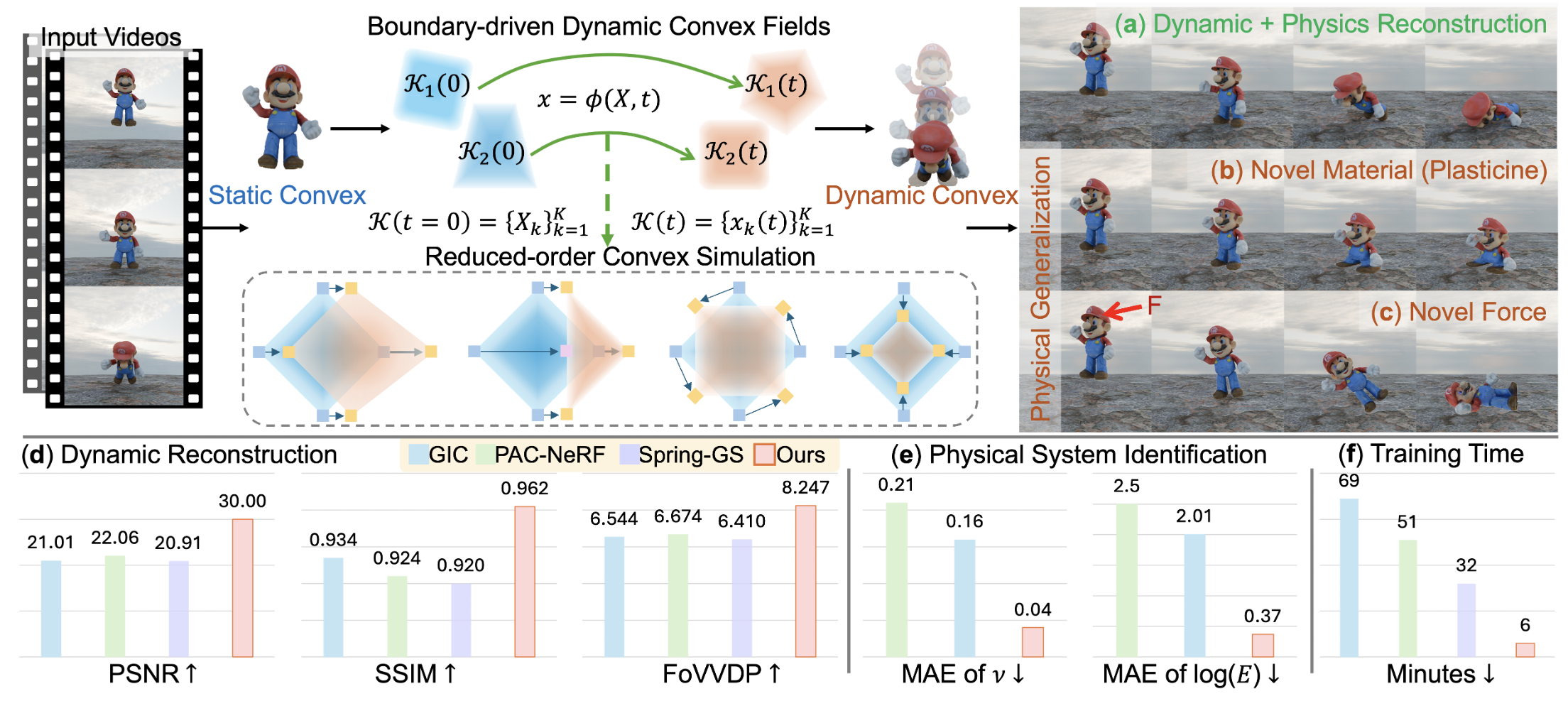
We present PhysConvex, a physics-informed dynamic convex field, that can preserve geometry, explain motion through physics, and generalize to future or new physical conditions. PhysConvex represents a dynamic object as material-space deformable convex primitives whose boundary is advected by physical dynamics. We further introduce a mesh-free reduced-order convex simulator in which neural skinning modes define physics-based deformation bases directly over deformable convex supports.
ECCV 2026 PDF Project Page
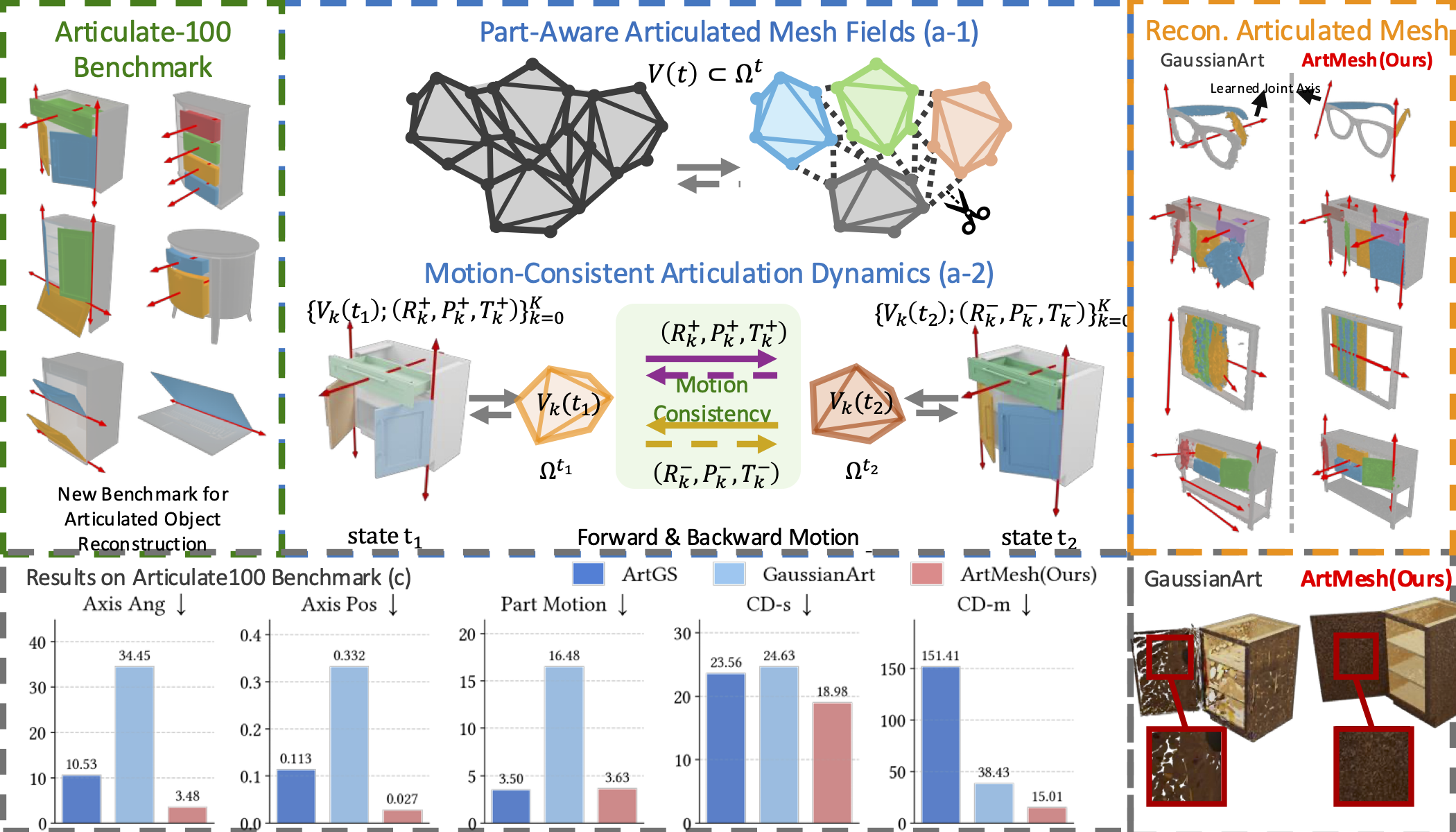
ArtMesh: Part-Aware Articulated Mesh Fields with Motion-Consistent Dynamics
Sylvia Yuan*, Dan Wang*, Ravi Ramamoorthi, Xinrui Cui
We present ArtMesh that improves articulated 3D object reconstruction by using a mesh-based rendering backbone instead of point-based Gaussian Splatting. By leveraging part-aware remeshing and motion consistency constraints, it achieves superior geometric reconstruction and joint estimation, especially on complex objects with many moving parts.
arXiv 2026 PDF Dataset
SR teaser
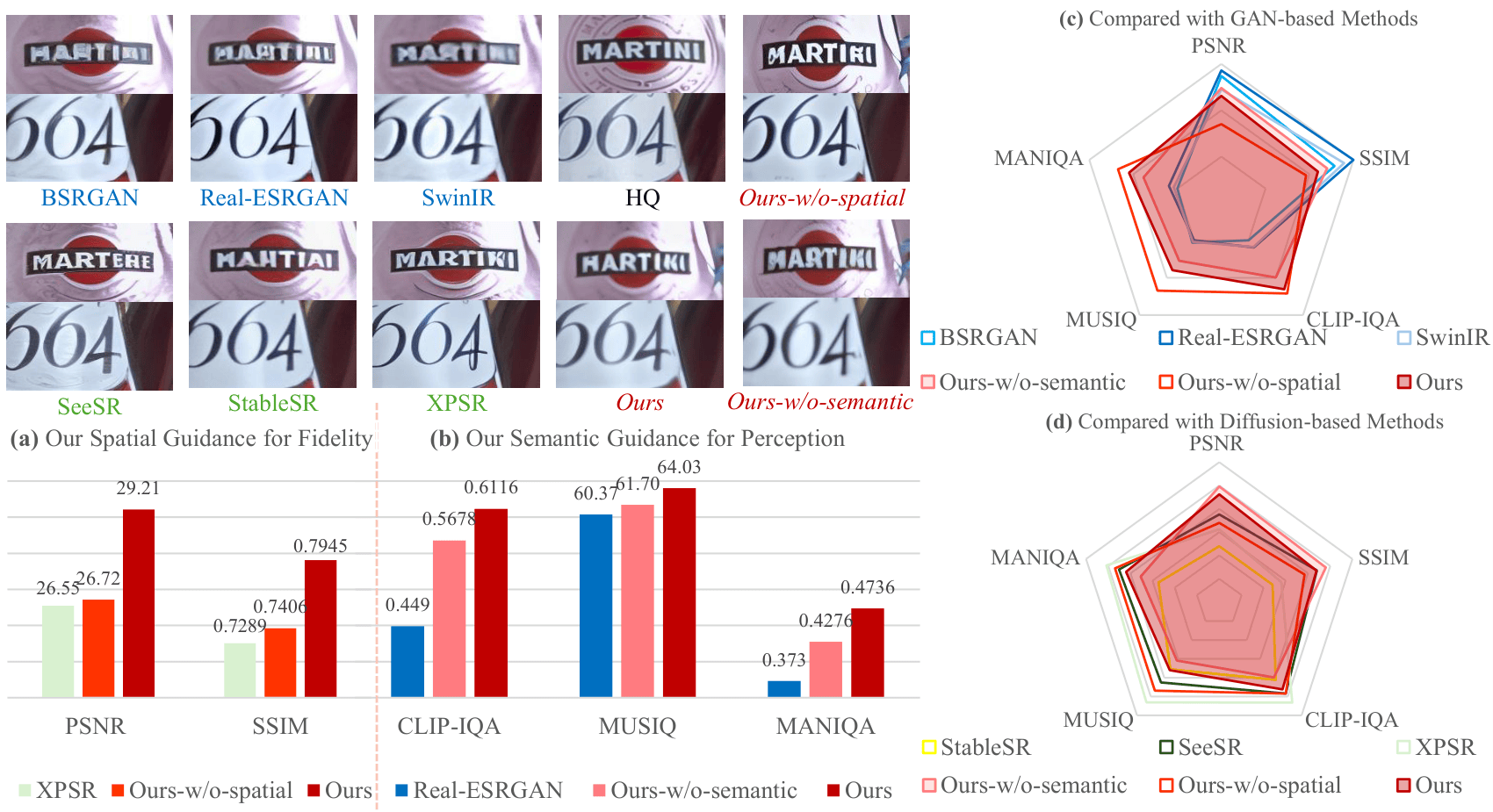
Revisiting the Perception-Distortion Trade-off with Spatial-Semantic Guided Super-Resolution
Dan Wang, Haiyan Sun, Shan Du, Z. Jane Wang, Zhaochong An, Serge Belongie, Xinrui Cui
We propose a spatial-semantic guided diffusion framework that integrates spatial-grounded textual guidance and semantic-enhanced visual guidance to achieve a superior balance in the perception-distortion trade-off, producing super-resolution results that are both perceptually realistic and structurally faithful.
arXiv 2026 PDF Project Page
Evolution Flow teaser
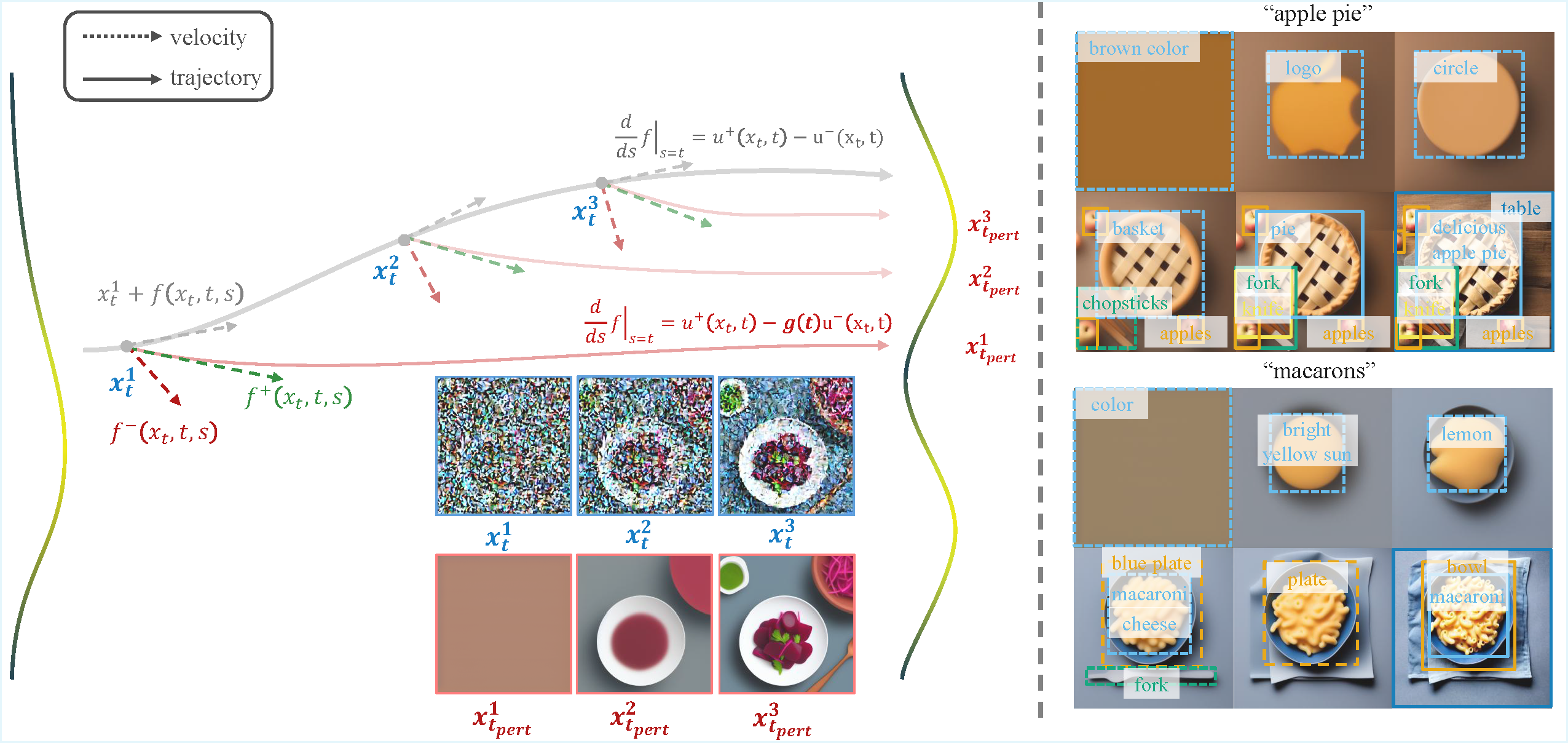
Interpretable Concept Evolution Flow in Diffusion Models
Yuxuan Liu, Dan Wang, Xinrui Cui
Coming soon, 2026 Project Page
RAIGen teaser
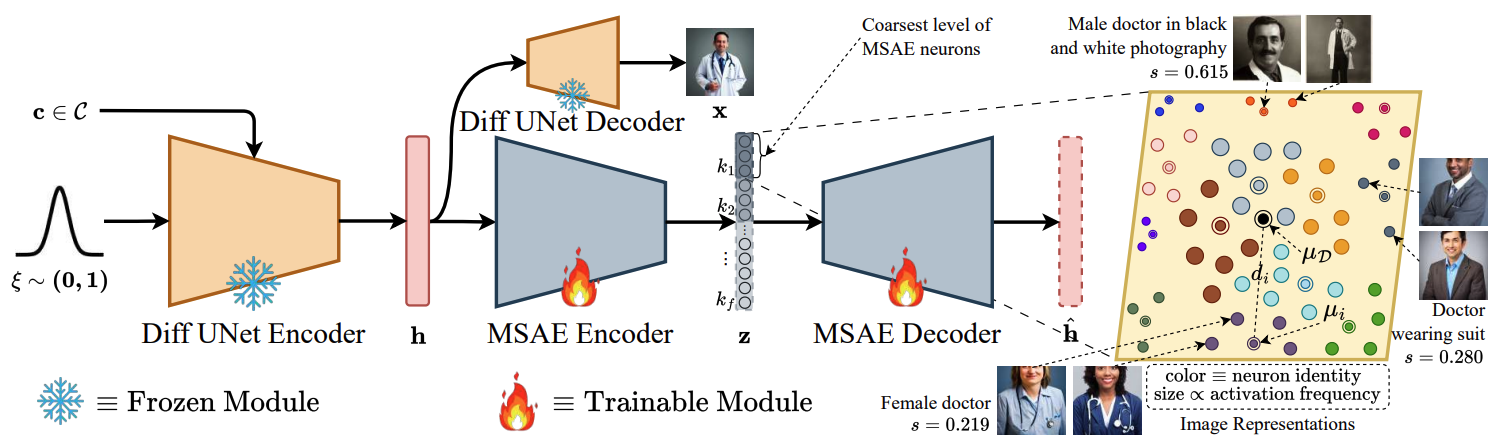
RAIGen: Rare Attribute Identification in Text-to-Image Generative Models
Silpa Vadakkeeveetil Sreelatha, Dan Wang, Serge Belongie, Muhammad Awais, Anjan Dutta
We introduce a novelframework for rare attribute identification in diffusion models, extending bias analysis from predefined fairness categories or majority-dominant features to the systematic identification of underrepresented attributes encoded in model representations.
ICML 2026 PDF
Differentiable Light Transport with Gaussian Surfels via Adapted Radiosity for Efficient Relighting and Geometry Reconstruction
Kaiwen Jiang, Jia-Mu Sun, Zilu Li, Dan Wang, Tzu-Mao Li, Ravi Ramamoorthi
We adopt Gaussian surfels as the primitives and build an efficient framework for differentiable light transport, inspired from the classic radiosity theory.
SIGGRAPH Asia 2025 (ACM TOG) PDF Project Page
StyleMorpheus teaser
StyleMorpheus: Learning a StyleGAN-based 3D-aware morphable face model with a disentangled style space
Peizhi Yan, Rabab Ward, Dan Wang, Qiang Tang, Shan Du
We propose the StyleMorpheus 3D-aware face model, the first style-based neural 3DMM that can be successfully trained on in-the-wild 2D face images and supports various applications such as single-image 3D-aware face reconstruction and face editing.
Neurocomputing, 2025 PDF Project Page
Coarse-To-Fine Tensor Trains for Compact Visual Representations
Sebastian Loeschcke, Dan Wang, Christian Leth-Espensen, Serge Belongie, J Michael Kastoryano, Sagie Benaim
We propose PuTT (Prolongation Upsampling Tensor Train) to overcome optimization bottlenecks in compact tensor train representations for visual data. By implementing a novel coarse-to-fine upsampling strategy, PuTT incrementally refines tensor networks, outperforming existing tensor-based methods in compression, denoising, and novel view synthesis tasks.
ICML 2024 PDF Project Page
InNeRF teaser
InNeRF: Learning Interpretable Radiance Fields for Generalizable 3D Scene Representation and Rendering
Dan Wang, Xinrui Cui
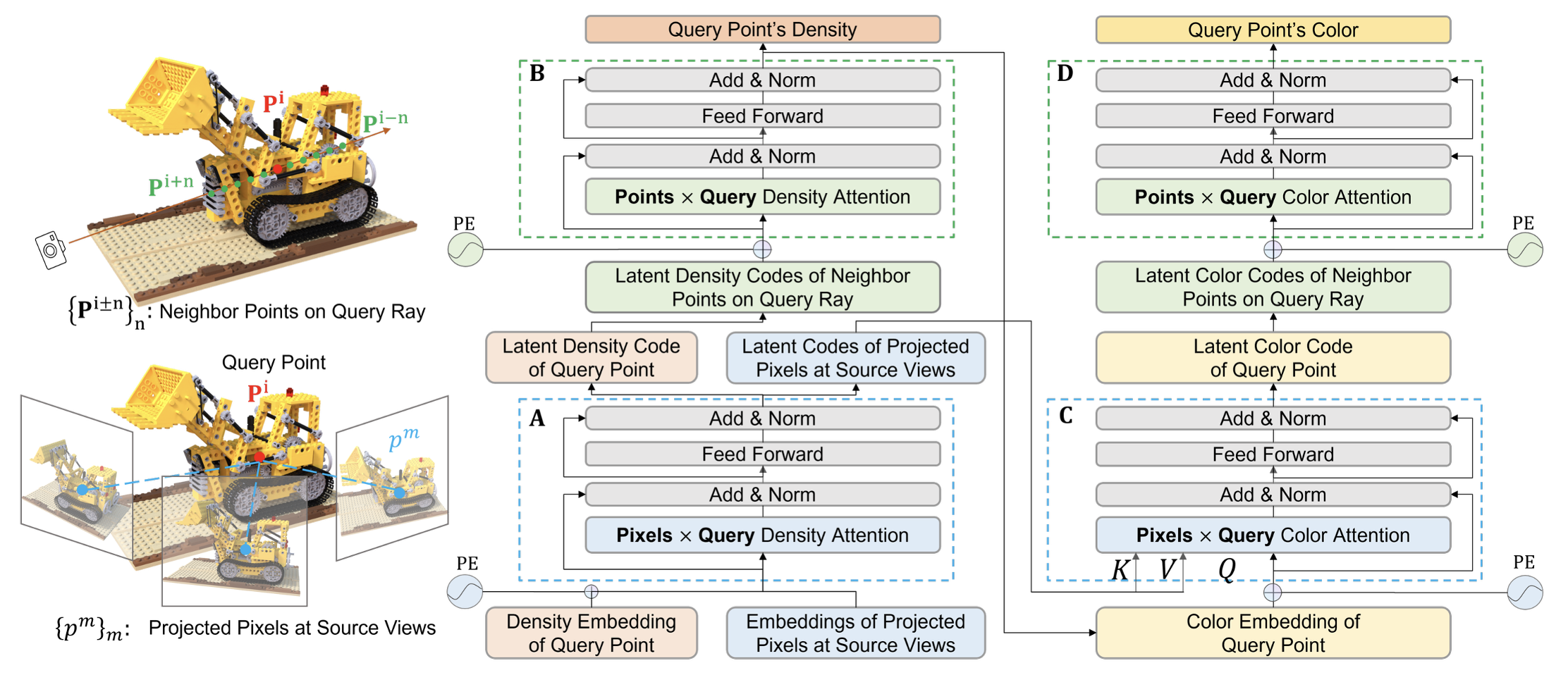
We propose InNeRF, an end-to-end Transformer-based framework that unifies source-view fusion and target-view rendering into a single interpretable process. By modeling the complex relationships between adjacent points along a query ray and their projected 2D source pixels, it improves geometric and appearance consistency, outperforming existing neural rendering methods under large viewpoint disparities.
ACM Multimedia, 2024 PDF Project Page
COSeg teaser
Rethinking Few-shot 3D Point Cloud Semantic Segmentation
Zhaochong An, Guolei Sun, Yun Liu, Fayao Liu, Zongwei Wu, Dan Wang, Luc Van Gool, Serge Belongie
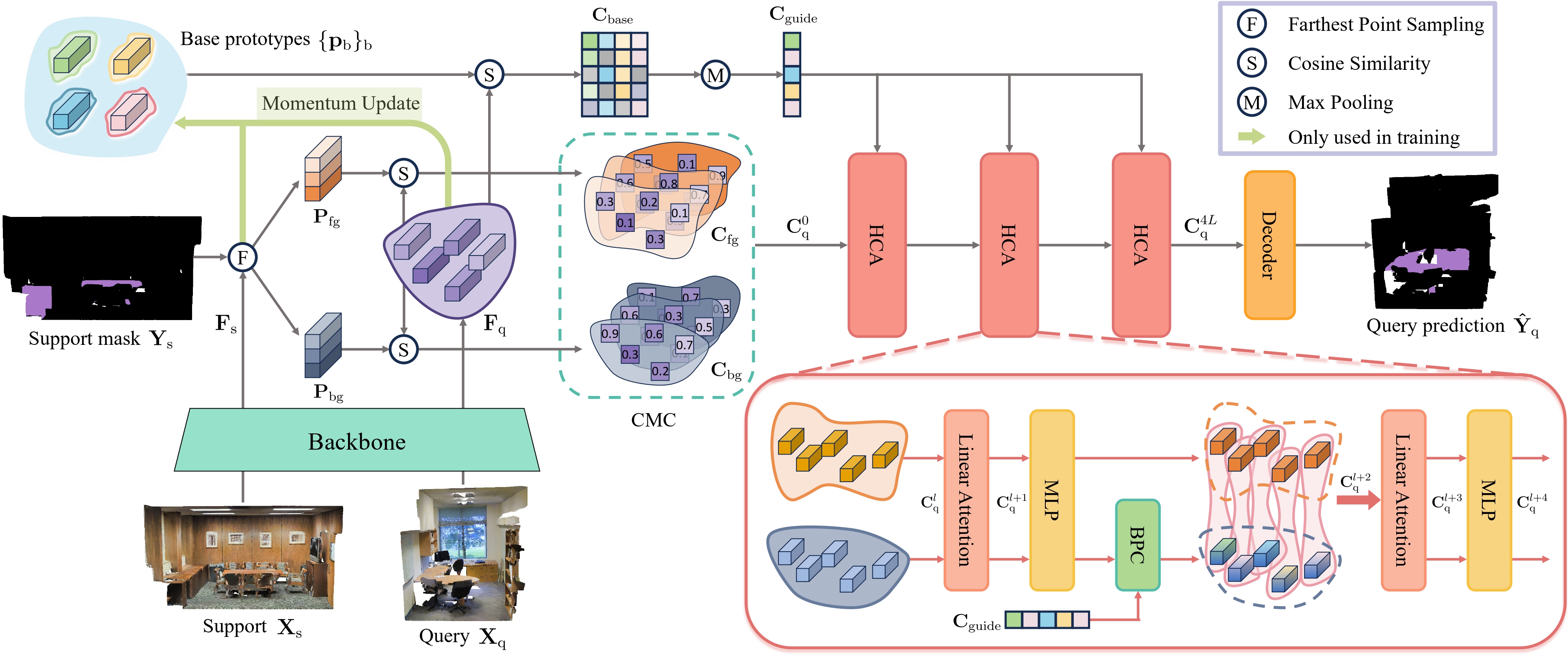
We re-evaluate few-shot 3D point cloud semantic segmentation by addressing foreground leakage and sparse point distribution with a new standardized benchmark. It introduces COSeg (Correlation Optimization Segmentation), which shifts the focus from feature optimization to correlation optimization using class-specific multi-prototypical correlations, hyper-correlation augmentation, and base prototype calibration to achieve superior accuracy.
CVPR 2024 PDF Project Page
Federated learning teaser
Contrastive-enhanced Domain Generalization with Federated Learning
Xinhui Yu, Dan Wang, Martin McKeown, Z. Jane Wang
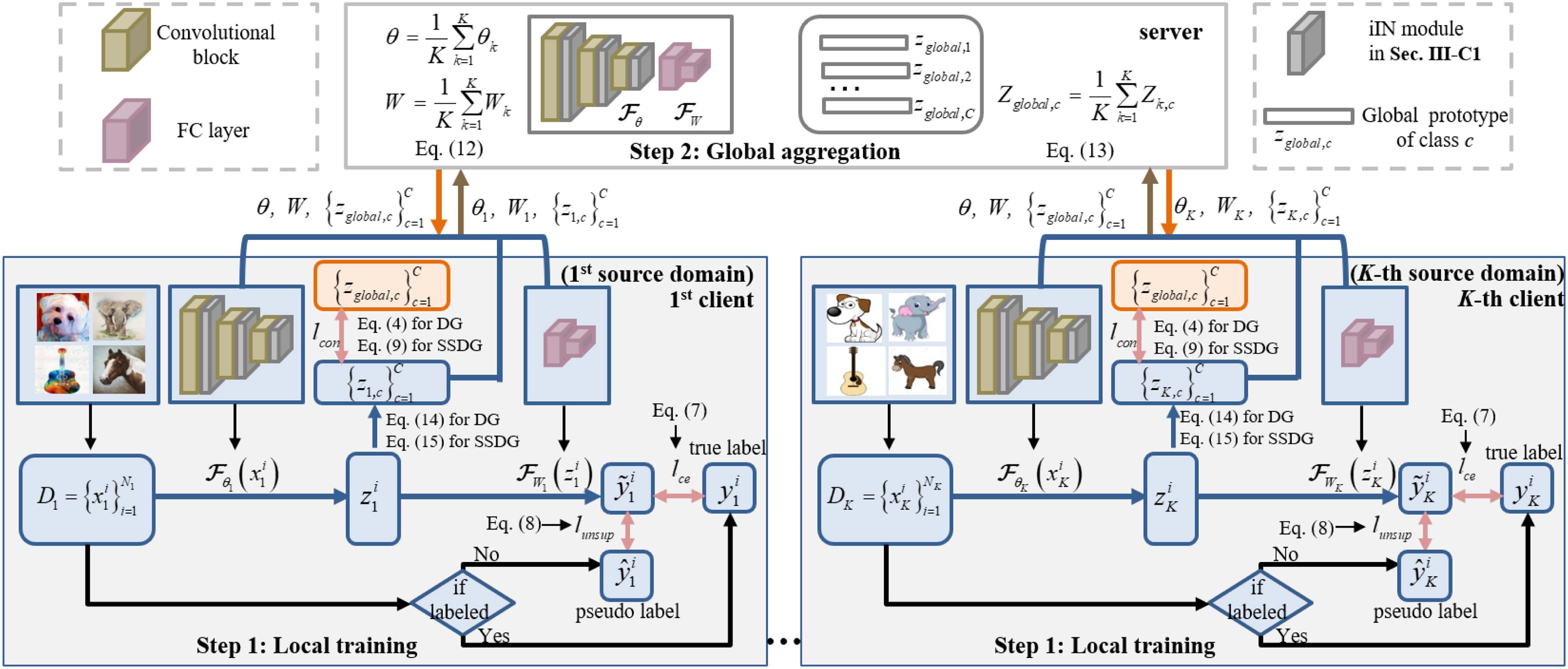
We propose a contrastive-enhanced domain generalization (DG) framework within a federated learning paradigm to address data privacy and distribution shifts. It utilizes a task-focused instance normalization module alongside a prototype-based contrastive loss to achieve robust classwise alignment across domains, demonstrating high performance in both fully supervised and semisupervised settings.
IEEE Transactions on Artificial Intelligence, 2023 PDF
HeadNerf+ teaser
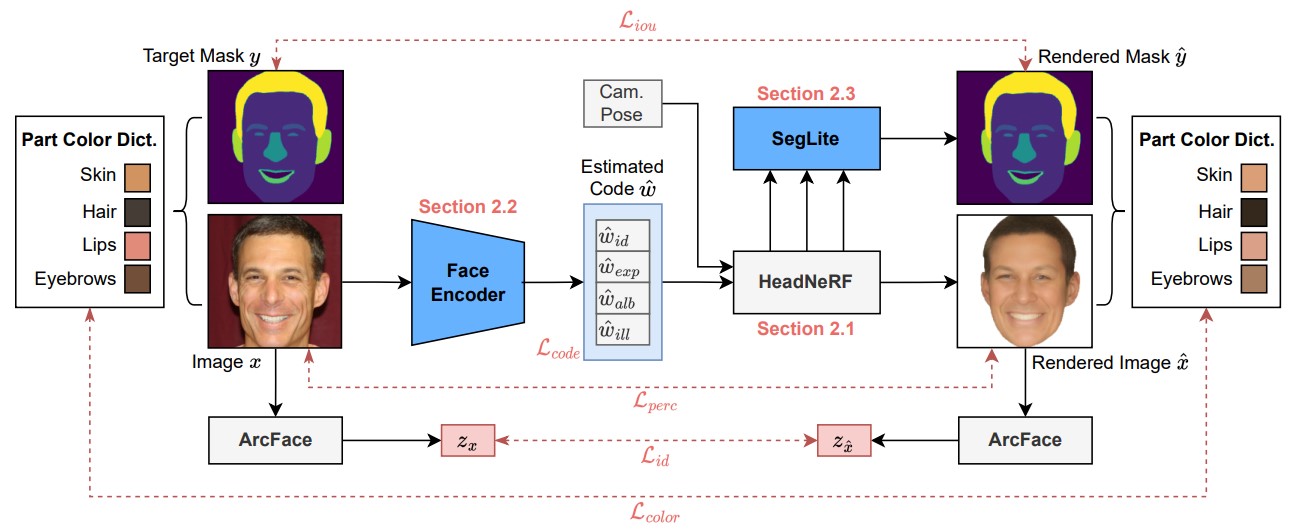
Learning Disentangled Features for Nerf-Based Face Reconstruction
Peizhi Yan, Rabab Ward, Dan Wang, Qiang Tang, Shan Du
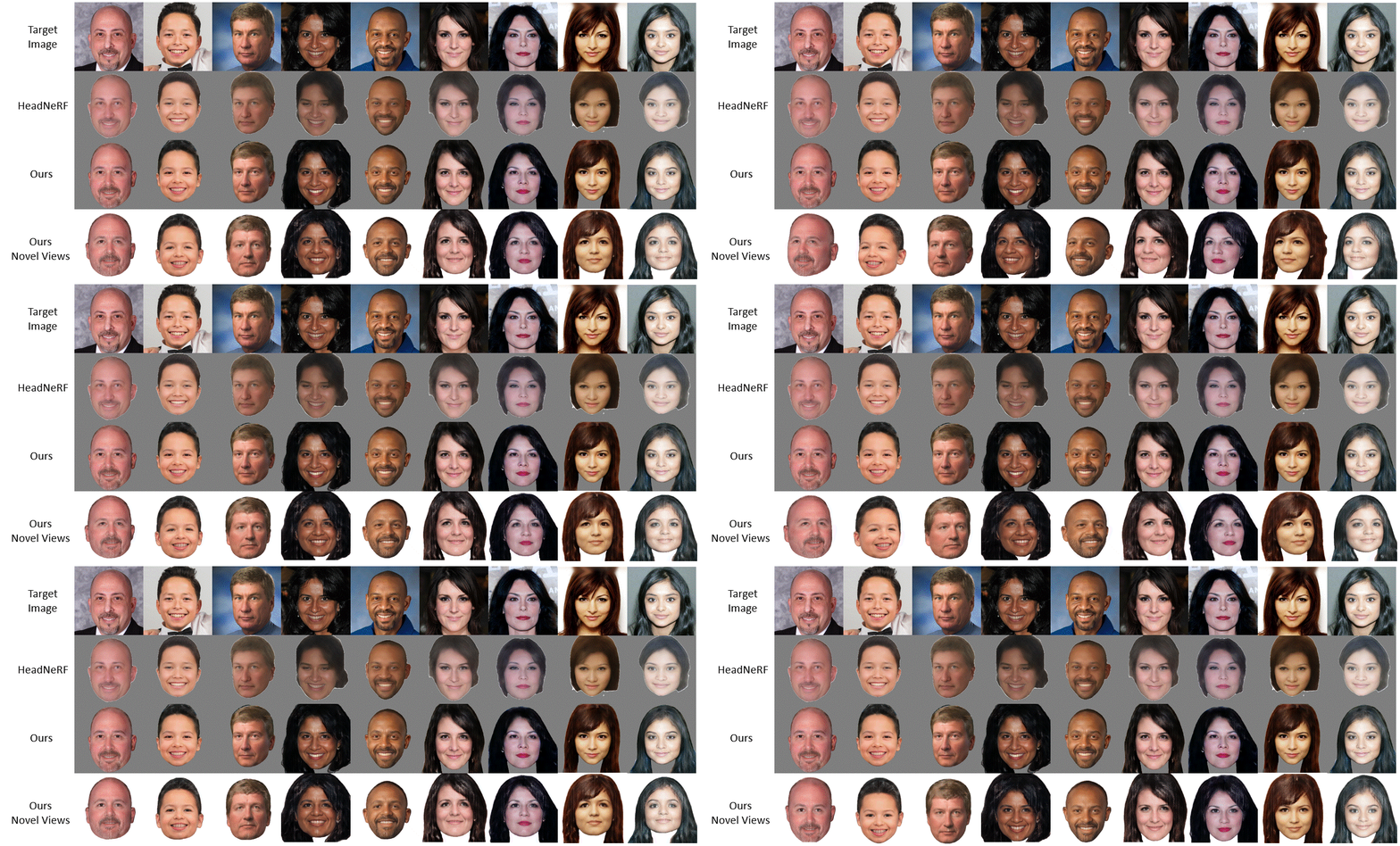
We propose a fast 3D-aware face reconstruction framework to solve HeadNeRF's speed and geometric limitations. By training a dedicated encoder for direct feature extraction and integrating a lightweight semantic segmentation network with a facial-parts-based loss, the method significantly reduces reconstruction time while improving accuracy.
ICIP 2023 PDF Project Page
Hyperspectral classification teaser
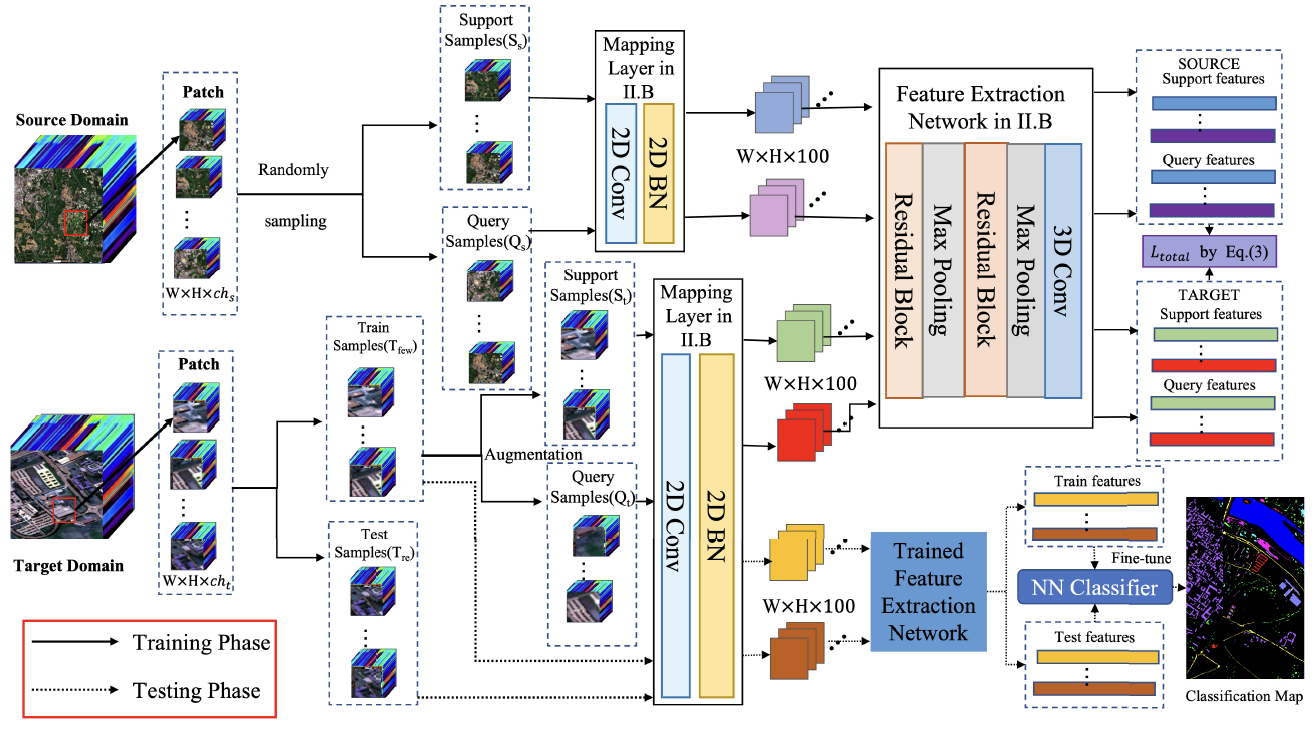
Cross-Domain Few-Shot Contrastive Learning for Hyperspectral Images Classification
Suhua Zhang, Zhikui Chen, Dan Wang, Z. Jane Wang
We introduce a few-shot contrastive learning model for hyperspectral image (HSI) classification to overcome the challenges of limited labeled data and high computational costs. By pairing a 3D-CNN backbone with a contrastive learning framework, it mitigates high interclass similarity and large intraclass variance, outperforming state-of-the-art models across five datasets.
IEEE Geoscience and Remote Sensing Letters, 2022 PDF
Image fusion teaser
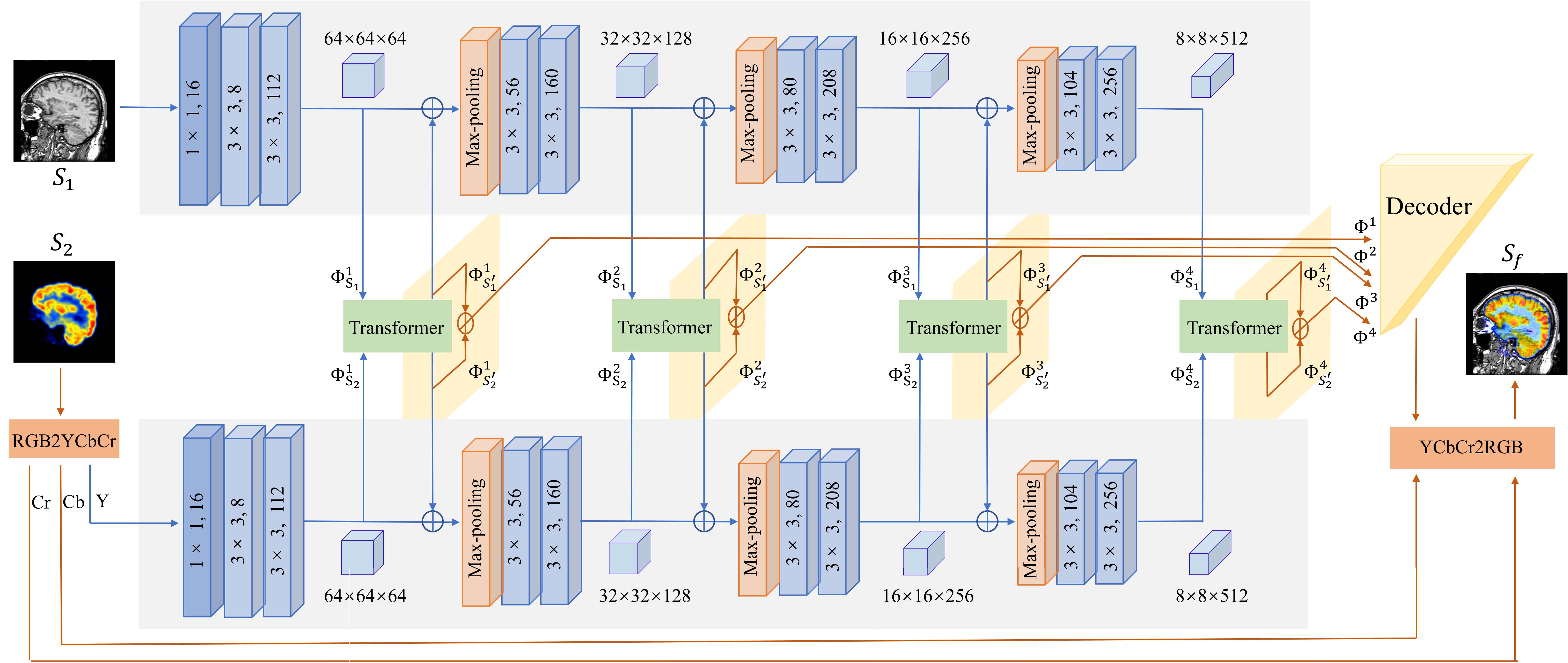
Transformer-Based End-to-End Anatomical and Functional Image Fusion
Jing Zhang, Aiping Liu, Dan Wang, Yu Liu, Z. Jane Wang, Xun Chen
We propose a contrastive-enhanced domain generalization (DG) framework within a federated learning paradigm to address data privacy and distribution shifts. It utilizes a task-focused instance normalization module alongside a prototype-based contrastive loss to achieve robust classwise alignment across domains, demonstrating high performance in both fully supervised and semisupervised settings.
IEEE Transactions on Instrumentation and Measurement, 2022 PDF
EVolT teaser
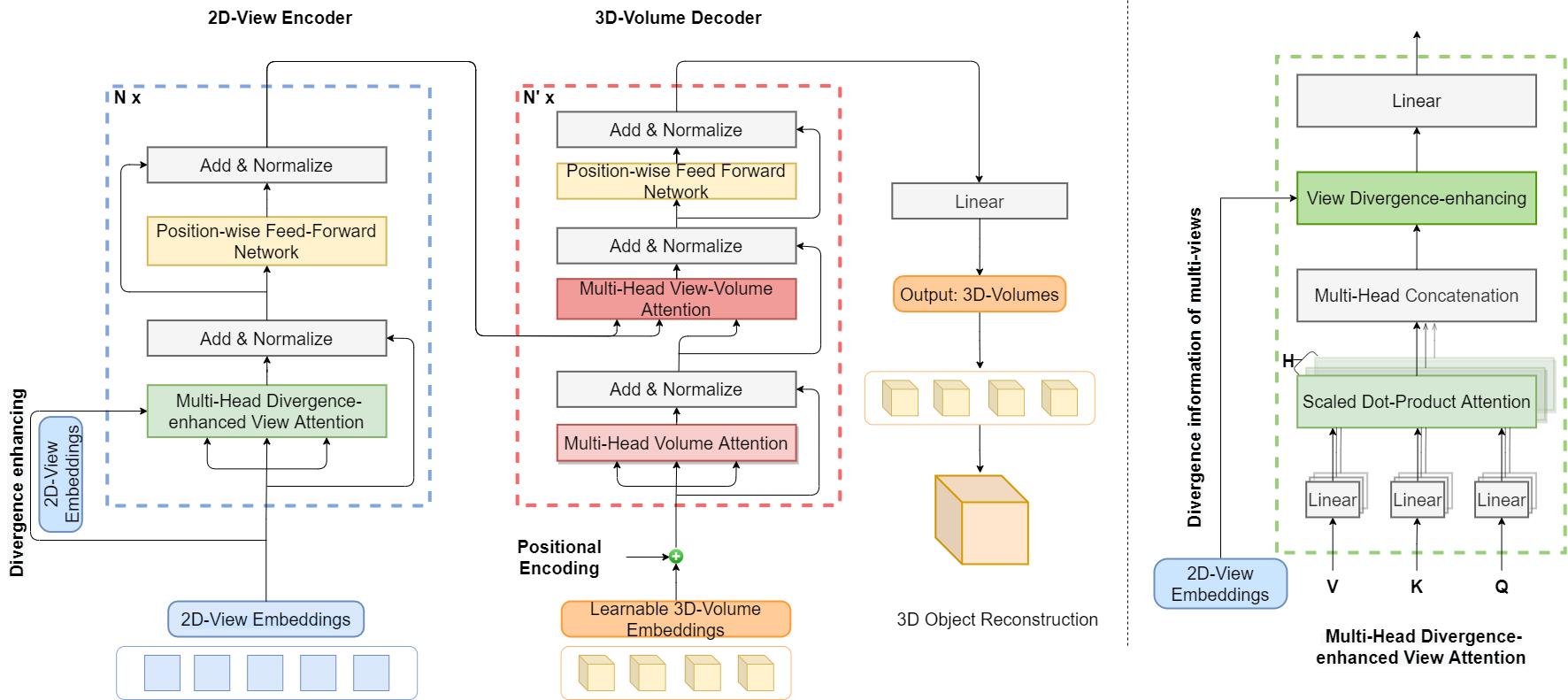
Multi-View 3D Reconstruction With Transformers
Dan Wang, Xinrui Cui, Xun Chen, Zhengxia Zou, Tianyang Shi, Septimiu Salcudean, Z. Jane Wang, Rabab Ward
We present a novel Transformer-based framework for multi-view 3D reconstruction that effectively captures long-range dependencies across views, leading to improved reconstruction quality and robustness.
ICCV 2021 Oral Presentation PDF Project Page
CHAIN teaser
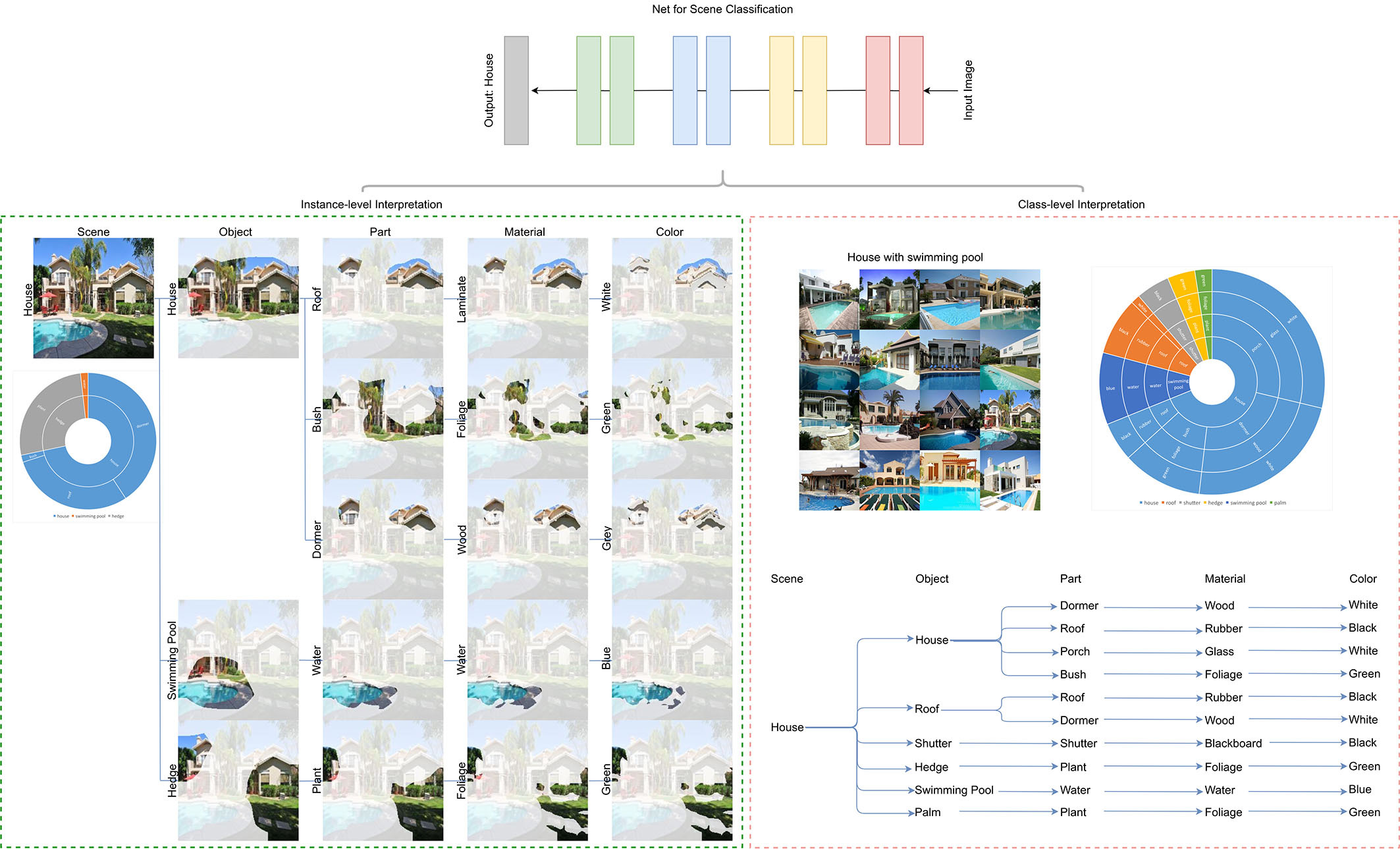
Interpreting Bottom-Up Decision-Making of CNNs via Hierarchical Inference
Dan Wang, Xinrui Cui, Xun Chen, Rabab Ward, Z. Jane Wang
We propose an interpretation scheme that explains CNN decision-making by backwardly decomposing high-level semantic concepts into a hierarchy of lower-level visual concepts across different network layers, mimicking the bottom-up hierarchical logic of human visual recognition.
IEEE Transactions on Image Processing, 2021 PDF Project Page
CHIP teaser
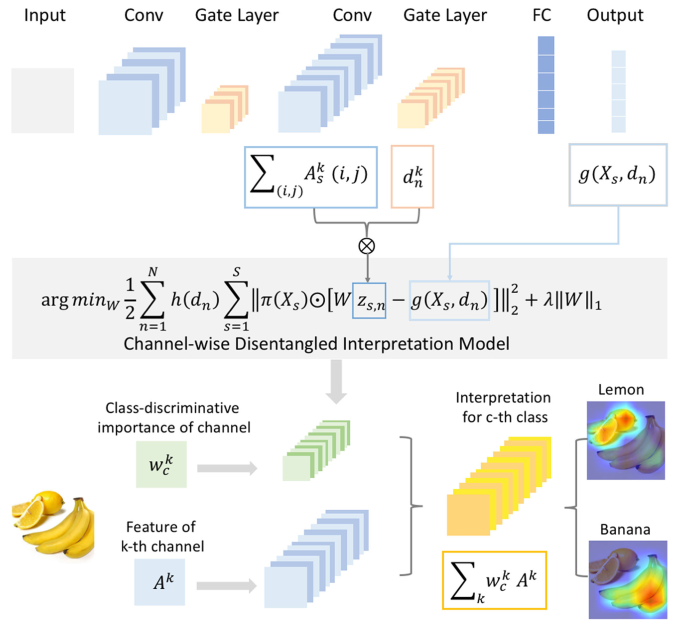
CHIP: Channel-Wise Disentangled Interpretation of Deep Convolutional Neural Networks
Xinrui Cui, Dan Wang, Z. Jane Wang
We propose a channel-wise disentangled interpretation method that identifies the most influential channels in a CNN for a given prediction and disentangles their contributions to different visual concepts, providing a more detailed and interpretable explanation of the model’s decision-making process.
IEEE Transactions on Neural Networks and Learning Systems, 2020 PDF Project Page
FLOWIN teaser
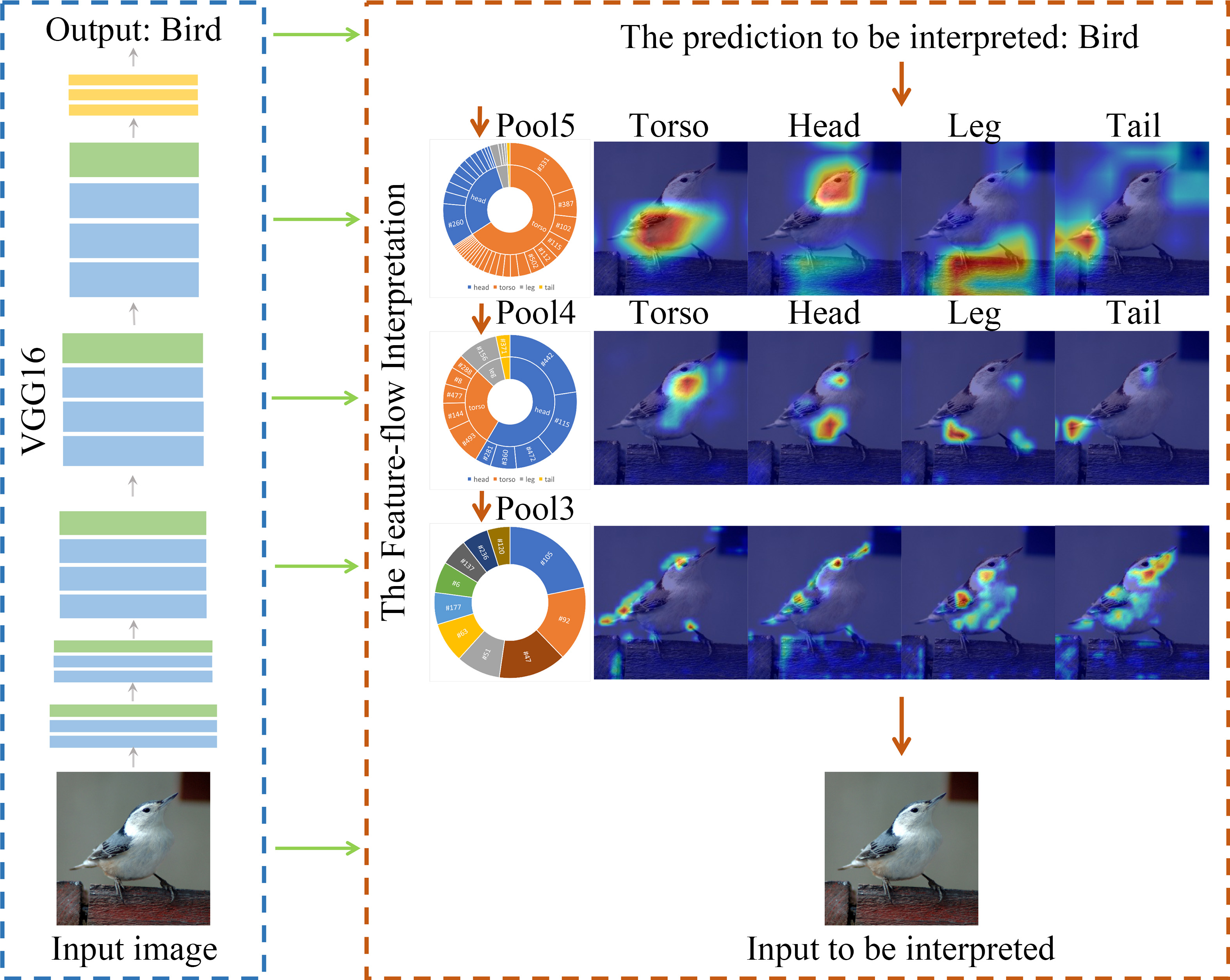
Feature-Flow Interpretation of Deep Convolutional Neural Networks
Xinrui Cui, Dan Wang, Z. Jane Wang
We propose a feature-flow interpretation method that learns the flow of information through a CNN by tracking the activation patterns of features across layers, revealing how different features contribute to the final prediction.
IEEE Transactions on Multimedia, 2020 PDF Project Page
MINT teaser
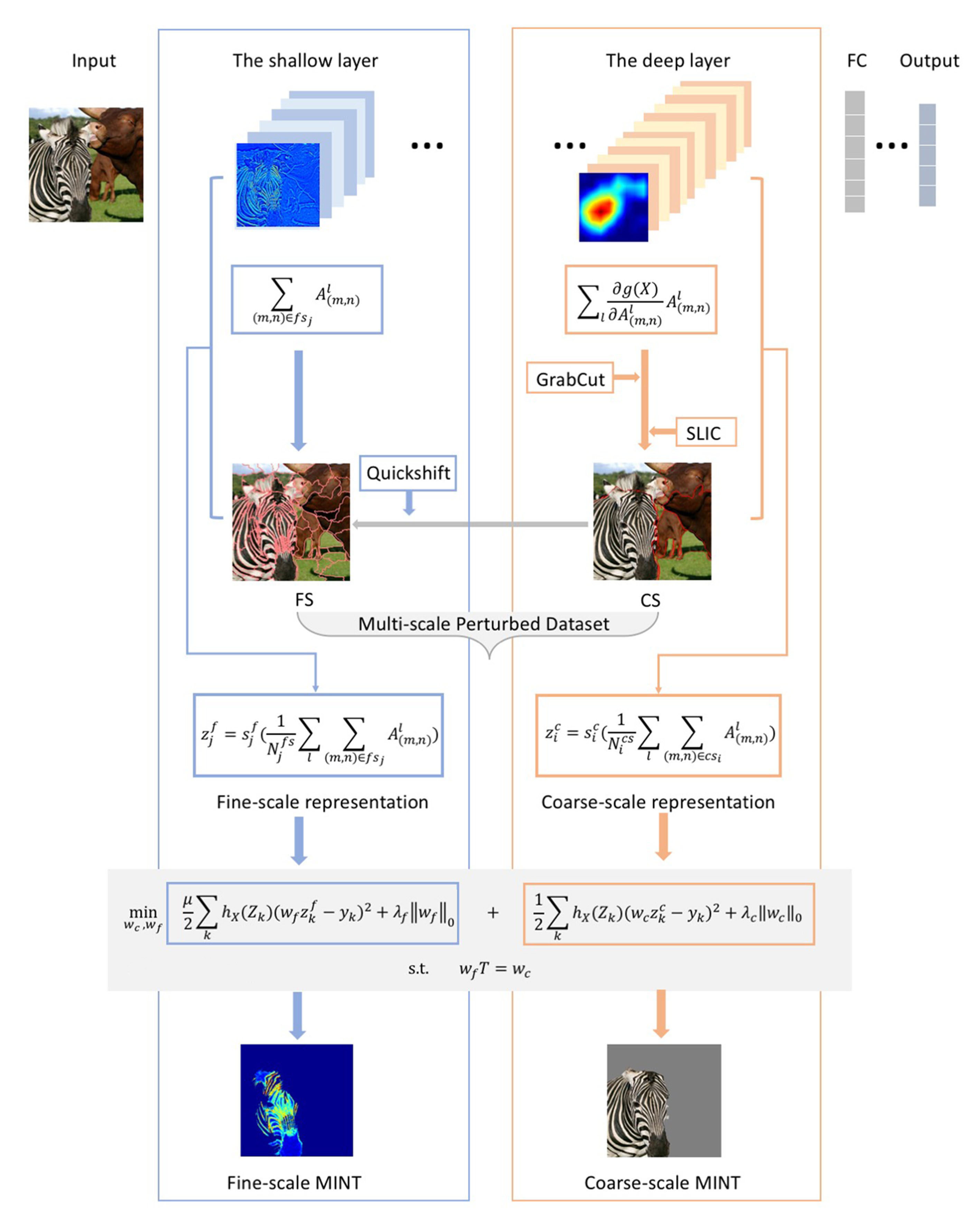
Multi-Scale Interpretation Model for Convolutional Neural Networks: Building Trust Based on Hierarchical Interpretation
Xinrui Cui, Dan Wang, Z. Jane Wang
We propose a multi-scale interpretation model that provides hierarchical explanations of CNN predictions by interpreting the model’s decision-making process at multiple levels of abstraction.
IEEE Transactions on Multimedia, 2019 PDF Project Page
FLOWIN teaser
Robust Sparse Unmixing for Hyperspectral Imagery
Dan Wang, Zhenwei Shi, Xinrui Cui
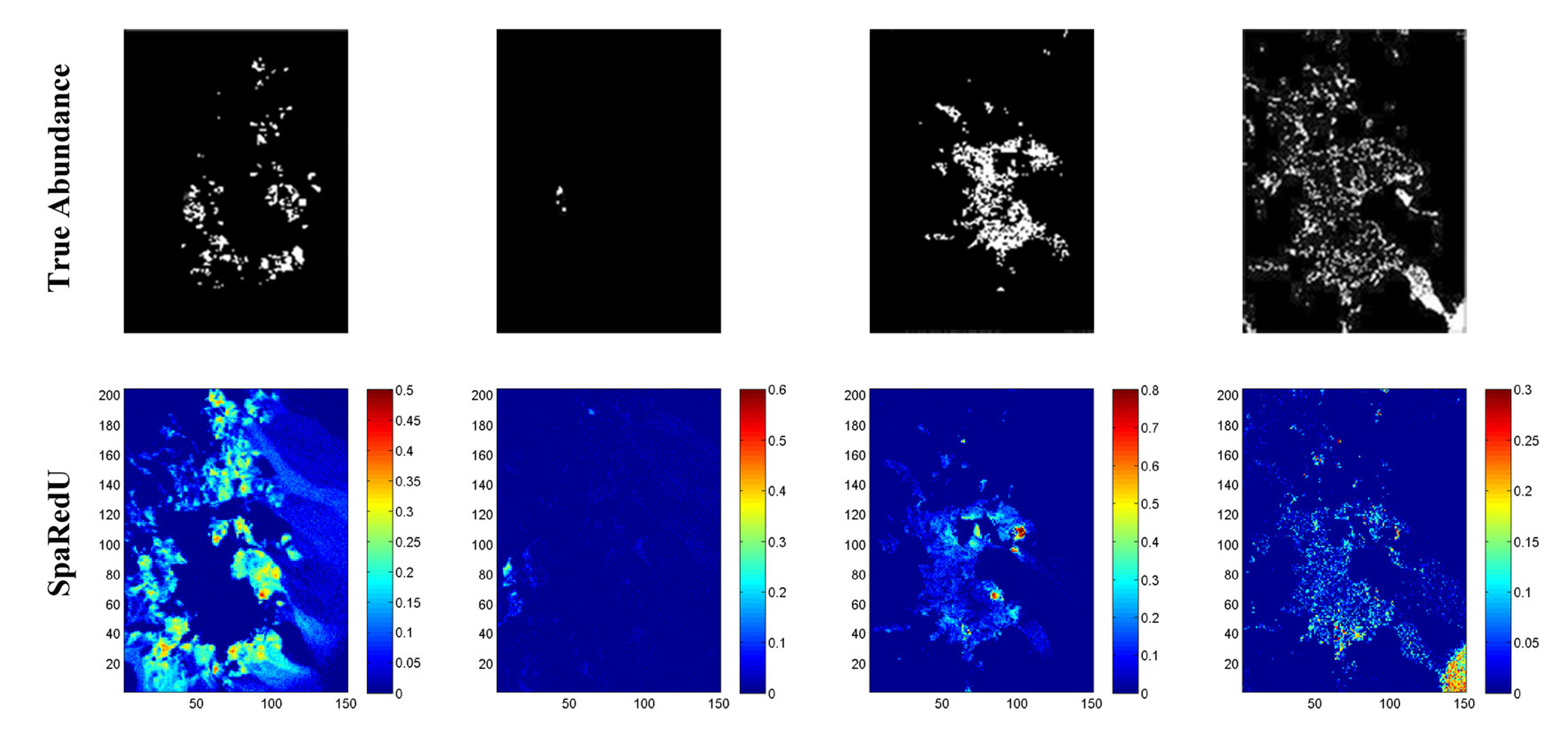
We propose a robust sparse unmixing method for hyperspectral imagery that incorporates spatial information and a novel regularization term to improve the accuracy and robustness of unmixing results.
IEEE Transactions on Geoscience & Remote Sensing, 2018 PDF
Sea-land segmentation teaser
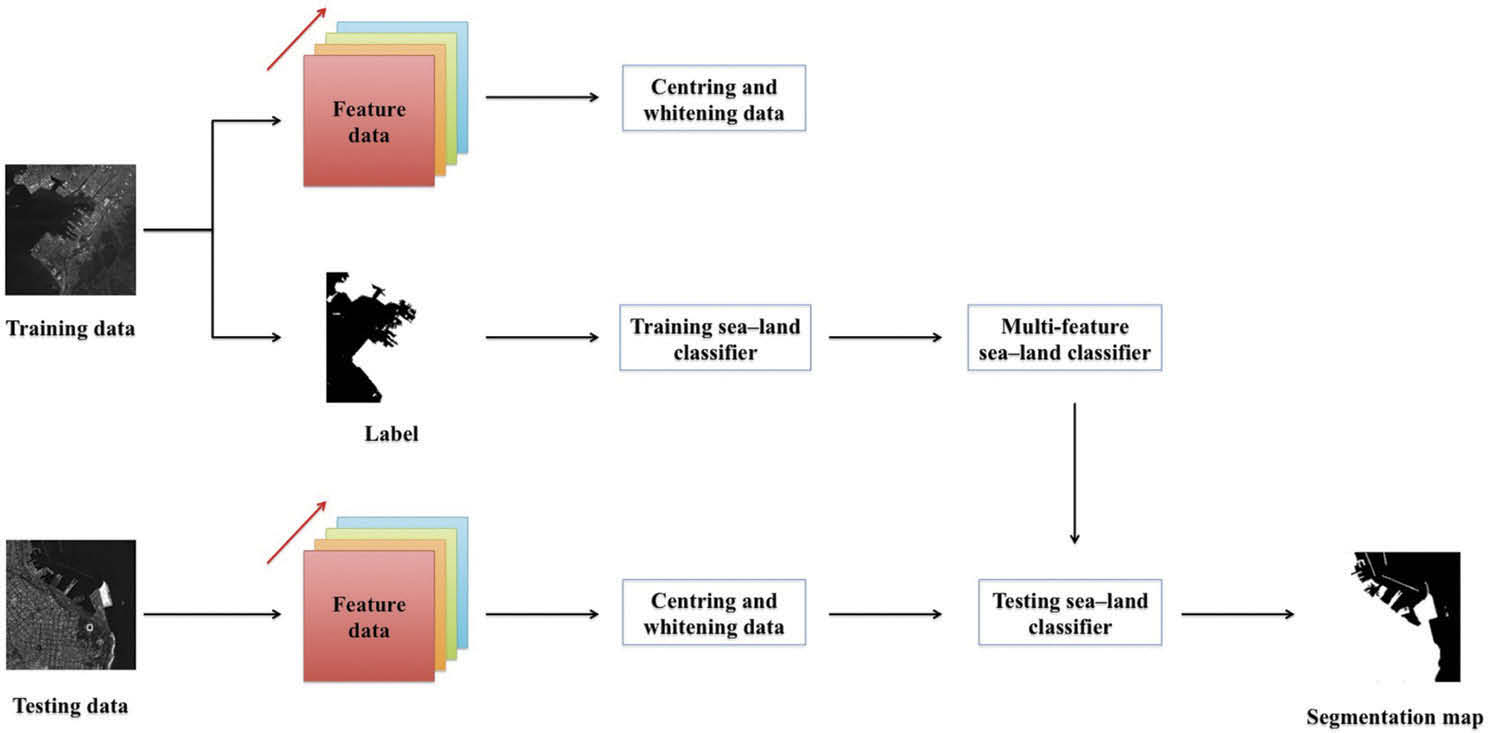
Multi-feature Sea-land Segmentation based on Pixel-wise Learning for Optical Remote-sensing Imagery
Dan Wang, Xinrui Cui, Fengying Xie, Zhiguo Jiang, Zhenwei Shi
International Journal of Remote Sensing, 2017 PDF
IGARSS teaser
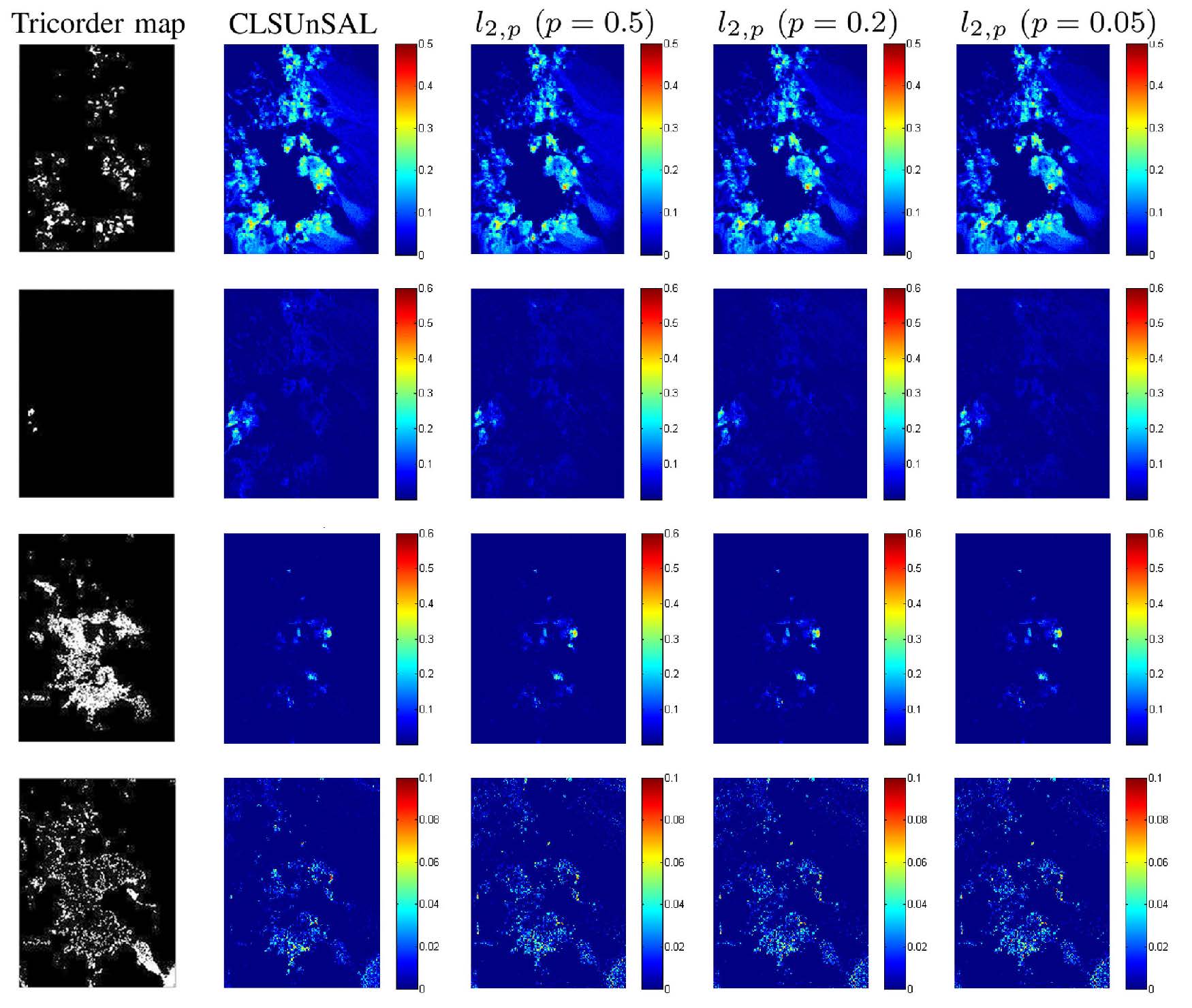
Collaborative sparse unmixing of hyperspectral data using L2,P norm
Dan Wang, Zhenwei Shi, Wei Tang
International Geoscience and Remote Sensing Symposium 2016 PDF

Contact

I welcome research collaborations and academic conversations related to computer vision, graphics, machine learning, neural rendering, and interpretable AI. For research inquiries, please reach out through my academic profile or social links above.